Different Types of Hydraulic Seals
Here’s an expanded explanation for each type of hydraulic seal, crafted to provide comprehensive and easy-to-understand content that can help your blog outrank the competition:
1. O-Rings
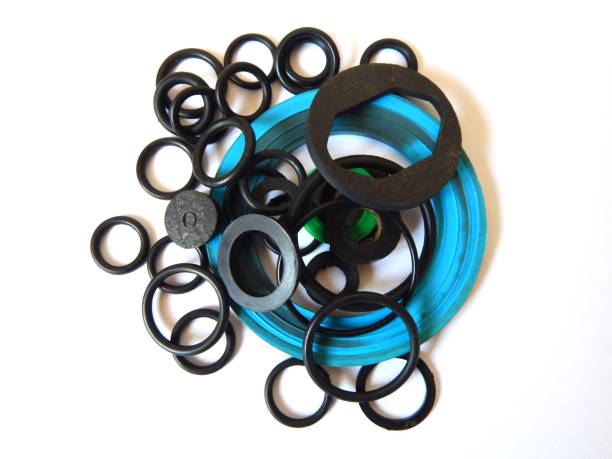
O-Rings are the most fundamental yet crucial type of hydraulic seals used across various industries. These circular seals fit into a machined groove to form a seal assembly to prevent the passage of fluids or gases between two components. O-Rings are valued for their versatility and are used in static, dynamic, hydraulic, and pneumatic applications.
Constructed usually from elastomers like Nitrile Rubber, Silicone, or Fluorocarbon, they offer excellent resistance to extreme temperatures, pressure, and chemical exposure. Their effectiveness is largely dependent on the correct sizing and material choice tailored to specific operating conditions.
2. Piston Seals
Piston seals are vital for the proper functioning of hydraulic cylinders, where they seal the cylinder bore to prevent fluid flow across the piston. This ability to maintain pressure differential is crucial for the piston’s reciprocating motion within the cylinder.
Made from materials such as polyurethane or rubber, these seals must withstand high pressures and wear while providing minimal friction. Piston seals come in various designs, including single-acting (sealing pressure from one side) and double-acting (sealing pressure from both sides), catering to different types of cylinder applications.
3. Rod Seals
Rod seals maintain the efficiency of a hydraulic system by preventing fluid from leaking out of the cylinder, thus maintaining the pressure within. These seals are placed in the gland, where the rod retracts back into the cylinder, creating a high-pressure seal against the rod. Challenges for rod seals include dealing with high dynamic pressures and adjusting to changes in side loads.
The material choice, often polyurethane or rubber, provides crucial properties such as resistance to wear and compatibility with hydraulic fluids. Proper installation and regular maintenance are key to prolonging the life of rod seals.
4. Wiper Seals
Wiper seals serve a protective function in hydraulic cylinders, preventing external contaminants such as dirt, moisture, and debris from entering the system as the rod cycles in and out of the gland. By keeping the contaminants out, wiper seals protect the internal components like rod seals and bearings from premature wear and failure.
These seals are typically made from polyurethane or rubber, offering durability against abrasion and environmental elements. Wiper seals need to be replaced regularly to ensure the integrity of the hydraulic system remains intact.
5. Guide Rings
Guide rings play a crucial role in hydraulic cylinders by preventing metal-to-metal contact, which can lead to damage and decreased efficiency. These rings help to align and guide the piston and rod within the cylinder, ensuring smooth and accurate movements.
Made from materials like PTFE or nylon, guide rings can withstand high load capacities and offer low friction characteristics. Their usage enhances the overall lifespan and performance of the hydraulic system by reducing wear and tear on critical components.
6. Buffer Seals
Buffer seals are employed in hydraulic cylinders to cope with fluctuating high pressures, enhancing the durability of the primary seals by absorbing pressure spikes. Located in the cylinder head, buffer seals complement the rod seals by providing an additional layer of leakage protection.
Typically made from materials like polyurethane or rubber, these seals are critical in applications involving high dynamic loads where they help in maintaining the stability and reliability of hydraulic systems.
7. Wear Rings
Wear rings, also known as wear bands, are used to support moving parts within a hydraulic cylinder, such as the piston or the rod. They prevent metal-to-metal contact, reducing friction and preventing scoring and galling on the cylinder walls and piston rods.
Wear rings are made from durable materials like PTFE or phenolic resin, which can endure high compressive loads and resist wear. Their application not only prolongs the service life of hydraulic components but also maintains the efficiency of the cylinder’s operation.
8. Backup Rings
Backup rings are hard rings that provide extrusion resistance and support to primary seals in high-pressure environments. Typically placed adjacent to O-Rings and other soft seals, backup rings help prevent the primary seal from being squeezed out into the clearance gap under high pressures.
Made from rigid materials such as PTFE or hard plastics, they are crucial in applications with wide temperature ranges and varying chemical exposures, ensuring the stability and longevity of seal assemblies.
9. Vee Packing
Vee Packing seals consist of multiple V-shaped layers stacked together, creating a seal that can be adjusted by changing the number of layers to suit the application’s pressure requirements. This adaptability makes Vee Packing ideal for both high and low-pressure systems across different industries. Materials commonly used include fabric-reinforced rubber and polyurethane, which provide excellent sealing properties and resistance to wear and extrusion. Vee Packing is particularly effective in older equipment where the hardware may be worn but still serviceable.
10. U-Cup Seals
U-Cup seals are named for their U-shaped profile that provides an efficient sealing force to prevent fluid leakage in hydraulic systems. The design of U-Cup seals allows for a lip that contacts the surface of the cylinder, enhancing the sealing capability under varying pressure conditions.
These seals are typically made from polyurethane or rubber, materials chosen for their flexibility, durability, and resistance to wear. U-Cup seals are versatile and can be used in both rod and piston applications, providing a cost-effective solution for maintaining the hydraulic system’s performance.
Read the complete blog here:- https://delangesindustries.com/different-types-of-hydraulic-seals/

Comments
Post a Comment